
Walk into any drum shop and you’ll find a wall of sticks that all look much the same. The differences are small on paper – a millimetre of thickness here, a different tip shape there – but they change how a stick feels, how loud it plays and how long it lasts. This guide compares seven popular pairs you can buy on Amazon UK, from the sticks most drum teachers hand to their students to a budget two-pack that’s handy to keep as spares.
Our picks at a glance
What “5A” and “7A” actually mean
The number and letter on a pair of sticks describe their size. Lower numbers mean thicker sticks, so a 5A is thicker than a 7A. The letter is historical: “A” sizes were originally for orchestral and dance-band playing, while “B” sizes (such as 5B) were for bands and are thicker again.
The sizes aren’t standardised between brands, but they’re close. Vic Firth’s American Classic 5A is 16 inches (406 mm) long and 0.565 inches (14.4 mm) across. Their 7A is shorter and slimmer at 15.5 inches (394 mm) and 0.540 inches (13.7 mm). ProMark’s 5A is the same length as Vic Firth’s but a touch slimmer, at 0.551 inches (14 mm).
In practice:
- 5A is the middle-of-the-road size most drummers start with. It suits rock, pop, funk and most general playing.
- 7A is lighter and quicker, better for quieter playing, jazz and smaller hands.
- 5B is heavier and louder, for harder-hitting rock and metal.
If you’re not sure, start with a 5A.
Wood tip or nylon tip?
Most of the sticks here come in both versions, and the choice mainly affects your cymbals.
- Wood tips give a warmer, slightly darker sound. They’re the traditional choice and many drummers prefer the feel. Over time they chip and splinter, especially if you play a lot of ride cymbal.
- Nylon tips give a brighter, clearer “ping” on cymbals and won’t chip. The trade-off is that a nylon tip can occasionally come loose from the stick after heavy use.
If you play an electronic kit, nylon tips are a sensible choice because they won’t splinter on rubber cymbal pads.
1. Vic Firth American Classic 5A: best all-rounder
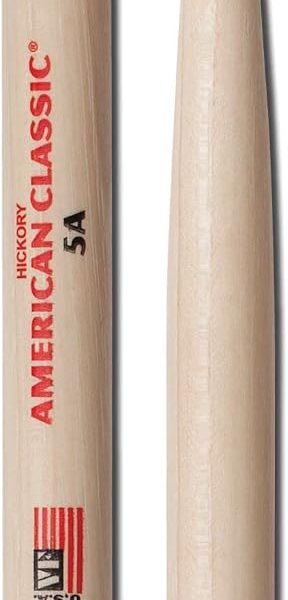
If you asked a room of drum teachers which stick to buy first, this is the one most of them would name. It’s made from American hickory, which is strong and absorbs shock well, with a medium taper that balances the weight evenly between the tip and the hand. The teardrop wood tip gives a full, rounded sound on drums and cymbals alike.
The main reason to recommend it is consistency. Buy another pair next year and it will feel the same as the last, which matters more than it sounds when you’ve built your technique around a particular stick.
What we like
- The standard size most teachers recommend
- Hickory is tough and absorbs shock
- Easy to replace with an identical pair
Watch out for
- Wood tips chip over time on cymbals
2. Vic Firth American Classic 5AN: best for cymbal clarity
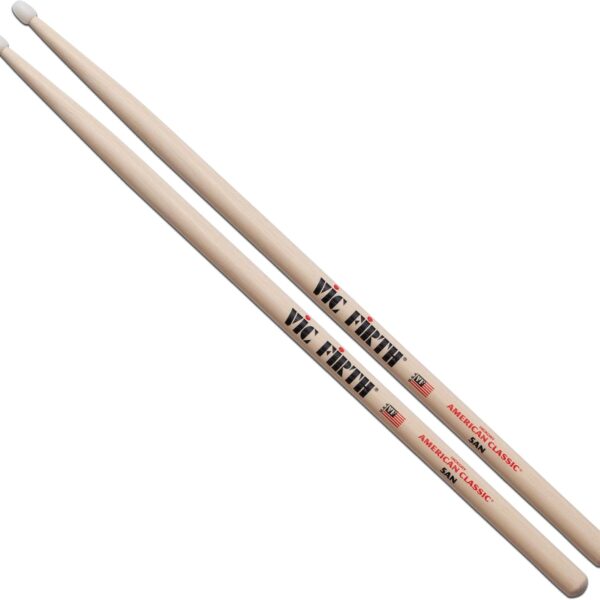
This is the same stick as the 5A above, with a nylon tip instead of a wooden one. The dimensions are identical, so it feels exactly the same in the hand. The difference is on the cymbals: ride patterns and hi-hat work come through brighter and more defined.
It’s a good pick if you play a lot of ride cymbal, if you record and want crisp cymbal detail, or if you play an electronic kit.
What we like
- Brighter, more defined cymbal sound
- Tip won't chip or splinter
- Same feel as the standard 5A
Watch out for
- Nylon tip can work loose after heavy use
3. ProMark Classic FireGrain 5A: most durable
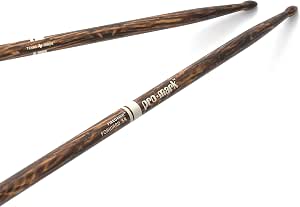
ProMark’s FireGrain sticks are made from hickory that’s been hardened with a heat-tempering process, which ProMark says makes them its most durable sticks while keeping the normal weight and balance. If you’re getting through sticks quickly – usually from rimshots on the snare or heavy crash cymbal work – these are worth trying.
They also feel different from the Vic Firths. They have a short taper, which puts more wood towards the tip for a slightly front-heavy feel with more punch, and an oval tip that gives a warm, full tone. They’re a little slimmer than a Vic Firth 5A.
What we like
- Heat-hardened hickory built to last
- Short taper gives extra power
- Oval tip has a warm, full sound
Watch out for
- Front-heavy feel won't suit everyone
- Slightly different feel if you're used to Vic Firth
4. Vic Firth American Classic Terra 5A Nylon: best-looking
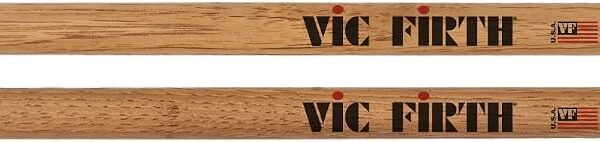
The Terra Series takes Vic Firth’s American Classic sticks and applies a stain that brings out the natural grain of the hickory, so no two pairs look quite the same. Underneath, it’s the familiar 5A shape with a nylon tip.
You don’t get a playing advantage over the standard 5AN. You’re paying for the look. They’re a nice choice as a gift, or if you simply prefer sticks that look a bit special on stage or in videos.
What we like
- Distinctive stained grain finish
- Same trusted 5A shape
- Nylon tip for clear cymbals
Watch out for
- No playing difference over the standard 5AN
5. Vic Firth American Classic 5AB Black: best for stage
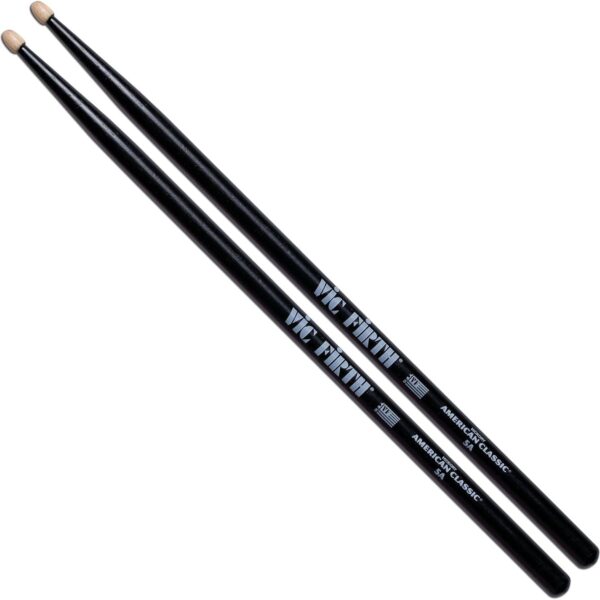
Another version of the classic 5A, this time with a black finish and a wood tip. Black sticks are a popular choice for live playing because they suit dark stage clothing and don’t catch the lights as much as natural wood.
The finish wears where the stick hits the rim, so expect the natural wood to show through on the shoulder after a while.
What we like
- Black finish looks sharp on stage
- Classic 5A feel and balance
Watch out for
- Finish wears through with rimshots
6. Vic Firth American Classic 7A: best for lighter playing
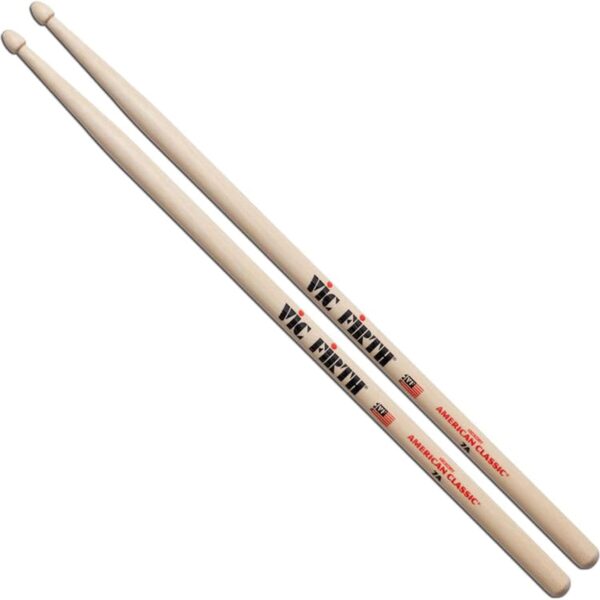
The 7A is shorter and slimmer than a 5A, which makes it lighter and quicker around the kit. It’s a natural fit for jazz, quieter gigs and practice, and many younger drummers and players with smaller hands find it more comfortable.
The trade-off is volume and durability: a thinner stick won’t hit as hard or last as long if you play heavily. If you mostly play loud rock, stay with a 5A.
What we like
- Light and fast
- Easier to control at low volume
- Comfortable for smaller hands
Watch out for
- Less volume and weight for loud styles
- Wears faster under heavy hitting
7. Donner 5A Maple, 2 pairs with bag: best budget spares
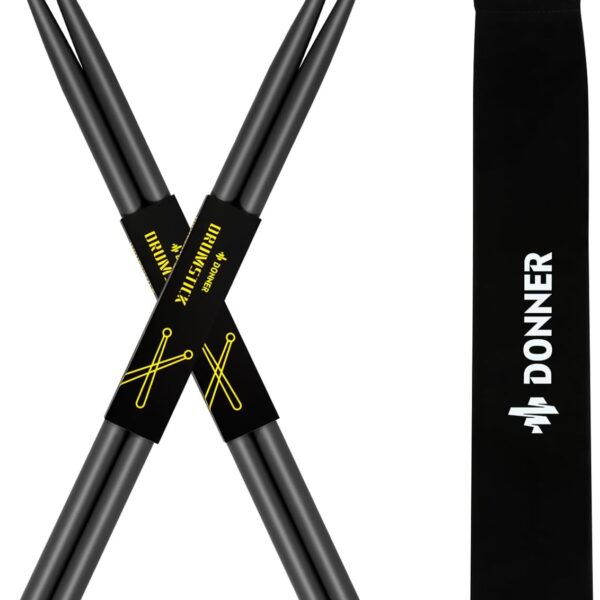
Donner’s sticks are made from maple rather than hickory. Maple is lighter and a little softer, so these feel less weighty than the other 5As here and won’t stand up to heavy hitting as well. The set comes with two pairs and a carrying bag.
They’re not our first choice as your main sticks, but they’re handy as spares for your gig bag, for a second practice space, or for someone just trying out the drums.
What we like
- Two pairs plus a bag
- Light maple feels easy to play
Watch out for
- Maple wears faster than hickory
- Less consistent than the premium brands
How to choose
- Just starting out? A Vic Firth American Classic 5A. It’s the standard that most lessons and teachers assume.
- Go through sticks quickly? Try the ProMark FireGrain 5A.
- Play an electronic kit, or lots of ride cymbal? Choose a nylon tip, such as the 5AN or the Terra 5A.
- Play quietly, or have smaller hands? The 7A.
- Need spares? The Donner two-pack is a sensible backup.
Whatever you choose, buy two pairs of the same model once you’ve settled on one. Sticks always seem to break or go missing at the worst moment.
How often should you replace drumsticks?
There’s no set timescale. It depends on how often and how hard you play. Replace a pair when the tips are badly chipped, the shoulders are splintering from rimshots, or a stick has a crack you can see or feel. Splinters can scratch cymbals and tear drum heads, and a cracked stick can snap mid-song. It’s also worth checking that both sticks in a pair still feel the same: if one has worn noticeably more than the other, the pair will feel unbalanced.